





Selecting the right model scale size directly determines the clarity, cost-effectiveness, and stakeholder impact of your aerospace or infrastructure project. Whether commissioning a 1:50 wind-tunnel prototype or a 1:200 planning consultation model, the scale choice influences viewing distance requirements, transport logistics, exhibition footprint, and ultimately, project success.
What Does “Right Model Scale Size” Mean in Aerospace and Infrastructure Context?
Right model scale size represents the proportional relationship between a physical model and its real-world counterpart, expressed as ratios such as 1:20, 1:50, or 1:100. In aerospace applications, a 1:8.5 scale model of an Airbus A320 means every dimension is 8.5 times smaller than the original aircraft. For infrastructure projects, a 1:500 city planning model reduces building heights and street widths by the same factor.
Dynamic scaling in aerospace requires additional considerations beyond dimensional accuracy. As NASA research demonstrates, wind-tunnel models must match not only geometric proportions but also weight distribution, structural frequencies, and aerodynamic response characteristics to achieve meaningful results. The scaling factor K determines that a model’s weight scales as K³, while structural frequencies must scale as K^(-0.5) to maintain similitude.
Common Scale Ratios | Aerospace Applications | Infrastructure Applications |
1:20 to 1:50 | Detailed component analysis, cockpit layouts | Architectural detail studies, building sections |
1:50 to 1:200 | Aircraft configuration studies, wind-tunnel testing | Site planning, transport hubs |
1:200 to 1:1000 | Fleet displays, mission planning | City planning, regional infrastructure |
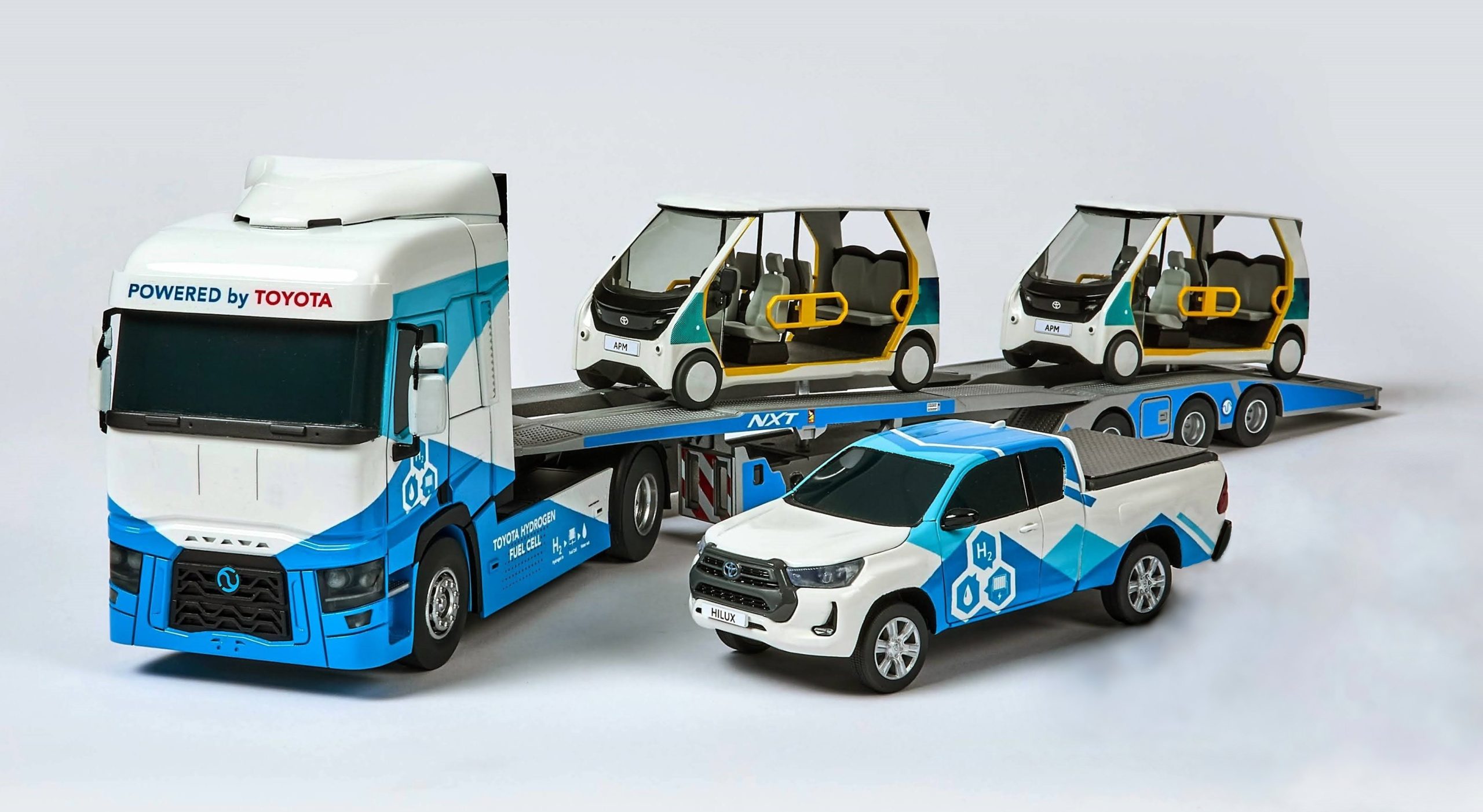
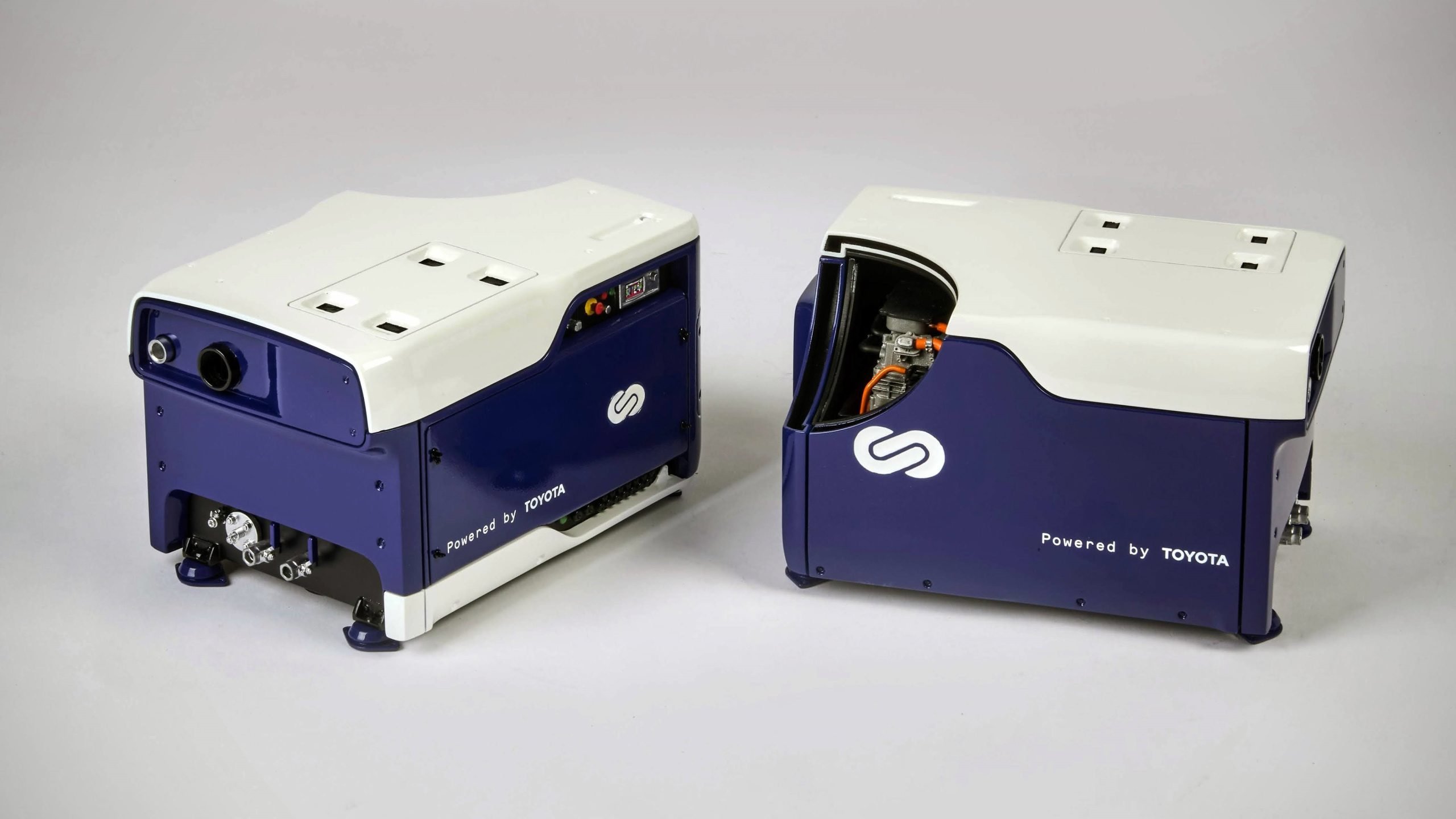

Which Right Model Scale Sizes Suit Aerospace vs Infrastructure Projects?
The right model scale size for aerospace selection depends primarily on testing requirements and viewing distance needs. Wind-tunnel applications typically employ scales between 1:5.5 and 1:10 for commercial aircraft, balancing Reynolds number requirements with tunnel dimensions. Defence applications under JSP 939 policy emphasise using authoritative data and maintaining precision tolerances appropriate to the scale factor.
The right model scale size for infrastructure follows different principles, focusing on stakeholder communication and site constraints. Planning consultation models commonly use 1:200 to 1:500 scales, allowing city blocks or transport networks to fit within exhibition spaces whilst maintaining sufficient detail for public engagement.
For aerospace exhibitions, 1:48 to 1:72 scales provide optimal balance between detail visibility and display footprint. These ratios allow visitors to appreciate engineering complexity whilst keeping models transportable and cost-effective. Infrastructure exhibitions benefit from 1:100 to 1:400 scales, enabling comprehensive site visualization without requiring excessive floor space.
Research from Orange Aerospace demonstrates that 1:8.5 scale aircraft models require careful attention to tolerance scaling, as “a scaled model flies much more ‘sensitively’ than a real aircraft”. This principle extends to all precision applications where the model scale size affects functional accuracy.
How Do Venue Constraints Affect Model Scale Size Selection?
Exhibition venue dimensions directly influence optimal model scale size through footprint calculations and viewing distance requirements. Standard exhibition spaces range from 2m x 2m (4 square metres) for budget displays to 6m x 3m (18 square metres) for comprehensive presentations.
Viewing distance calculations follow established ratios where optimal engagement occurs at 1.5 to 2.5 times the model’s longest dimension. A 1:100 scale model of a 200-metre building (resulting in a 2-metre model) requires 3-5 metre viewing distances for comfortable observation. This calculation must account for visitor circulation space and safety clearances within the exhibition footprint.
Transport case dimensions significantly constrain model scale size options. Standard freight elevators accommodate cases up to 2.5m x 1.5m x 2.0m, whilst air freight restrictions typically limit individual items to 1.5m maximum dimension for cost-effective shipping. These constraints often determine the practical upper limit for scale selection regardless of display preferences.
Footprint Calculation Example:
- 1:200 scale airport terminal model (original 400m x 200m)
- Model dimensions: 2.0m x 1.0m
- Required viewing space: 3.0m x 2.5m minimum
- Total exhibition footprint: 5.0m x 3.5m (17.5 square metres)
Corner exhibition stands provide enhanced visibility from multiple directions but may require adjusted model scale size to accommodate the angular viewing requirements and increased foot traffic.

What Are the Budget and Lead-Time Implications of Different Scale Sizes?
Larger model scale sizes typically require exponentially higher budgets due to increased material usage, manufacturing complexity, and transport costs. Material costs generally scale with the square of the scale factor for surface-detailed models, whilst structural complexity can drive cubic scaling relationships.
Manufacturing lead times increase significantly with scale size due to precision requirements and assembly complexity. AS9100 aerospace quality standards mandate specific tolerances and documentation requirements that become more challenging to achieve at larger scales. A 1:20 scale model may require 12-16 weeks production time compared to 6-8 weeks for equivalent 1:50 scale models.
Transport and logistics costs demonstrate dramatic scale sensitivity. Sea freight costs approximately £0.04 per tonne-kilometre, whilst air freight averages £2.10 per tonne-kilometre. Large-scale models often exceed air freight dimension limits, forcing surface transport with extended delivery schedules and higher risk profiles.
Budget Scale Comparison:
Scale Ratio | Material Cost Factor | Transport Cost Factor | Lead Time Factor |
1:200 | 1.0x (baseline) | 1.0x | 1.0x |
1:100 | 4.0x | 2.5x | 1.3x |
1:50 | 16x | 8.0x | 1.8x |
1:20 | 100x | 25x | 2.5x |
Exhibition stand rental costs also correlate with model scale size requirements. A 3m x 3m standard booth (£2,000-4,000) accommodates most 1:100 to 1:200 scale infrastructure models, whilst 1:50 scale aerospace models may necessitate 6m x 3m spaces (£5,000-8,000).


How Do AS9100 Standards and JSP 939 Requirements Influence Scale Selection?
AS9100 aerospace quality standards establish rigorous requirements for model accuracy and documentation that directly impact scale selection decisions. These standards mandate quality management systems ensuring dimensional accuracy, material traceability, and configuration control throughout the manufacturing process.
JSP 939 Defence Policy for Modelling and Simulation provides comprehensive guidance for UK defence applications, emphasising value for money at the enterprise level and technical coherence across platforms. The policy requires early engagement with the Defence Simulation Centre to access authoritative data and ensure compliance with established technical standards.
Under JSP 939, model scale size decisions must consider interoperability requirements and data reuse potential. The policy’s coherence principles mandate that scaling factors align with existing Defence enterprise architectures where possible, promoting cost-effective resource utilisation.
AS9100 requirements influence material selection and precision tolerances, particularly for aerospace applications where scale factors affect structural similitude. Quality documentation must trace all scaling calculations and tolerance decisions, creating audit trails that support certification maintenance.
For defence applications, JSP 939 emphasises using authoritative threat models and geospatial data sourced through approved channels. This requirement can constrain model scale size options when specific data sets are only available at predetermined scales or resolution levels.
Quality Standard Implications:
- Documentation Requirements: Complete scaling rationale and tolerance analysis
- Material Traceability: Certified materials with appropriate scale-specific properties
- Configuration Control: Change management for scale-related design modifications
- Data Authority: Use of approved source data at compatible scale factors
Which Scale Sizes Work Best for Different Application Types?
Wind-tunnel testing applications typically employ 1:5 to 1:10 scales to achieve proper Reynolds number matching whilst fitting within tunnel test sections. These scales provide sufficient model size for instrumentation installation whilst maintaining aerodynamic similarity with full-scale conditions.
Planning consultation models benefit from 1:200 to 1:500 scales, enabling comprehensive site visualization within standard meeting room constraints. These scales allow stakeholders to understand spatial relationships whilst maintaining transportability for community presentations.
Museum and educational displays typically use 1:48 to 1:144 scales for aerospace subjects, providing optimal detail visibility at typical viewing distances. These scales align with commercial model standards, potentially reducing costs whilst maintaining educational effectiveness.
Research and development applications often require 1:20 to 1:50 scales to accommodate instrumentation and modification requirements. Orange Aerospace’s 1:8.5 scale Airbus A320 demonstrates how larger scales enable more accurate dynamic response characteristics.
Corporate and marketing displays generally employ 1:100 to 1:200 scales, balancing visual impact with practical exhibition constraints. These scales provide sufficient detail for stakeholder engagement whilst maintaining reasonable transport and storage requirements.
Application-Specific Right Model Scale Guidelines
Aerospace Applications
- Component Testing: 1:1 to 1:5 (full-scale sections)
- Wind-Tunnel Models: 1:5 to 1:10
- Configuration Studies: 1:20 to 1:50
- Exhibition Models: 1:48 to 1:144
- Fleet Displays: 1:100 to 1:400
Infrastructure Applications
- Architectural Details: 1:10 to 1:50
- Building Studies: 1:50 to 1:200
- Site Planning: 1:200 to 1:500
- Urban Planning: 1:500 to 1:2000
- Regional Planning: 1:2000 to 1:10000
How Do Material Properties and Environmental Factors Affect Right Model Scale Size Decisions?
Material behaviour scaling requires careful consideration of how physical properties change with scale reduction to find the right model scale size. Structural stiffness scales as the fourth power of the scale factor, whilst weight scales cubically, creating potential dynamic response discrepancies that must be addressed through material selection or structural design modifications.
Environmental factors including temperature, humidity, and UV exposure affect different materials disproportionately at various scales. Smaller scale models may require more robust protective coatings due to higher surface area to volume ratios, whilst larger models may need additional structural reinforcement to maintain dimensional stability.
Wind loading on exhibition models scales quadratically with model dimensions, requiring consideration for outdoor displays or venues with significant air movement. A 1:50 scale model experiences four times the relative wind loading of a 1:100 scale equivalent, potentially necessitating heavier base structures or additional securing methods.
Material costs and availability often favour specific scale ranges. Standard modeling materials and components are readily available for common scales like 1:48, 1:72, and 1:100, whilst custom scales may require bespoke material preparation with associated cost and schedule impacts.
Frequently Asked Questions
What factors determine the right model scale size for aerospace vs infrastructure models?
Right model scale size selection depends primarily on intended use, venue constraints, and technical requirements. Aerospace models prioritise aerodynamic accuracy and instrumentation requirements, typically using 1:5 to 1:50 scales for technical applications and 1:48 to 1:144 for display purposes. Infrastructure models emphasise stakeholder communication and site understanding, commonly employing 1:100 to 1:500 scales for optimal viewing and transportability.
How does venue size and viewing distance influence the right model scale size?
Optimal viewing distance equals 1.5 to 2.5 times the model’s longest dimension. Exhibition venues constrain maximum model dimensions through floor space availability and ceiling height restrictions. Standard 3m x 3m exhibition spaces accommodate models up to 2 metres maximum dimension, whilst 6m x 3m spaces can display models up to 4 metres length.
Which sizes work best for site plans vs aircraft or rotorcraft?
Site planning models typically use 1:200 to 1:500 scales to show comprehensive layouts within reasonable footprints. Aircraft models employ 1:48 to 1:144 scales for displays and 1:5 to 1:20 scales for technical testing. Rotorcraft models often use slightly larger scales (1:32 to 1:48) to accommodate complex rotor system details.
How do transport cases, access routes, and lift sizes affect the right model scale size?
Standard freight elevators limit individual model components to 2.5m x 1.5m x 2.0m dimensions. Air freight restrictions typically constrain items to 1.5m maximum dimension for cost-effective shipping. These logistical constraints often determine practical upper limits for right model scale size regardless of display preferences, requiring modular construction for larger scales.
What budget and lead-time trade-offs come with larger model scale sizes?
Manufacturing costs generally scale quadratically with model dimensions, whilst transport costs can increase exponentially when size limits are exceeded. Lead times typically increase by 30-80% when moving from 1:200 to 1:50 scales due to precision requirements and assembly complexity. Material costs follow similar scaling patterns, with 1:50 scale models requiring approximately 16 times the material volume of equivalent 1:200 scale versions.
#modelscalesize #scalemodels #aerospacemodels #infrastructuremodels #exhibitionmodels #modelmakersUK #1to50 #1to100 #1to200 #1to500 #1to1000 #aerospaceengineering #transportplanning #R&Dmodels #precisionmodelmaking #engineeringdesign #citymodels #planningconsultation #museumdisplay #stakeholderengagement

Sources Used for Right Model Scale Sizes:
- https://ntrs.nasa.gov/api/citations/20050232785/downloads/20050232785.pdf
- https://www.landfx.com/kb/autocad-fxcad/units-scale/6343-conversion-lists.html
- https://www.orange-aerospace.com/about-us/projects/scalair-ssfd
- https://connectinevents.co.uk/exhibition-stands-sizes-explained/
- https://www.arckit.com/blogs/news/understanding-scale
- https://ryce.co.za/what-are-common-exhibition-stand-sizes/
- https://www.firstinarchitecture.co.uk/understanding-scales-and-scale-drawings/
- https://www.flightstore.co.uk/blog/model-aircraft-scales-explained
- https://en.wikipedia.org/wiki/AS9100
- https://www.gov.uk/government/publications/defence-policy-for-modelling-and-simulation-jsp-939
- https://www.p-r-i.org/registrar/services/aerospace-standards-as9100-standard
- https://assets.publishing.service.gov.uk/media/6787cd945a1adfc79556df70/JSP939_Part2.pdf
- https://ntrs.nasa.gov/api/citations/20205010550/downloads/Scitech_paper_GWL_%20MS_to_FS_v4.pdf
- https://assets.publishing.service.gov.uk/media/6787cd9d2cca34bdaf58a294/JSP939_Part1.pdf
- https://www.nqa.com/en-gb/certification/standards/as9100
- https://american-image.com/how-to-measure-trade-show-booth-carbon-footprint/
- https://tvvir.com/tv-sizes/
- https://www.rtings.com/tv/reviews/by-size/size-to-distance-relationship
- https://www.panasonic.com/uk/consumer/televisions-learn/televisions/tv-size-to-distance-calculator-how-to-find-the-perfect-size-tv.html
For expert guidance on model scale size selection and bespoke model commissioning, contact Model Products Limited to discuss your specific aerospace or infrastructure requirements with our experienced team.
Author bio for Model Products UK
Model Products Ltd is a UK-based specialist model making company, trusted by leading organisations to turn complex ideas into precise, tangible models that inform, persuade, and inspire. With over 60 years of combined experience in engineering, product design, and model making, the team blends traditional craftsmanship with advanced 3D printing, CNC machining, and modern fabrication techniques to deliver highly detailed, accurate, and durable models. From defence and aerospace to architecture, transport and infrastructure, R&D, agriculture, and commercial sales and marketing, Model Products creates bespoke scale models, working mechanical models, and exhibition display pieces tailored to each client’s objectives. Known for clear communication, rigorous attention to detail, and on-time delivery, the company supports projects at every stage – from early concept visualisation through to stakeholder presentations, training, and live event demonstrations.
By combining precision engineering with creative problem-solving, Model Products Ltd helps organisations de-risk decisions, showcase innovation, and bring complex stories to life in a way that digital visuals alone cannot achieve.